
Summary preview
Unveiling the Power of 'Carmen': The Unseen Foundation of Roman Culture
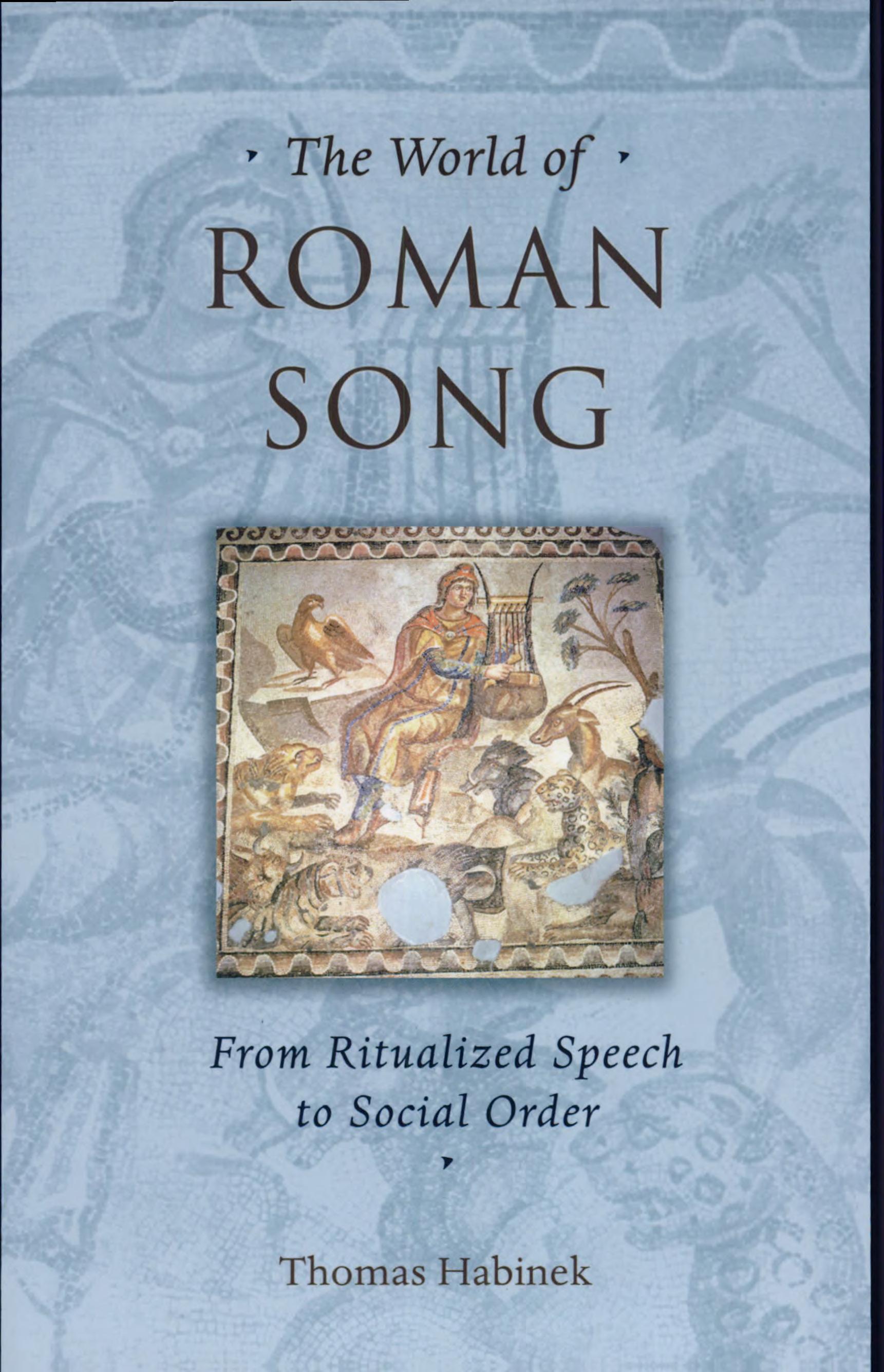
Thomas Habinek's book offers a profound re-evaluation of Roman culture, centered on the concept of 'carmen.' While often translated as 'song,' Habinek argues that for the Romans, 'carmen' represented a broad category of ritualized speech, encompassing poetry, storytelling, incantations, and any structured, performative utterance with a specific purpose. This concept, he posits, was the unseen foundation of Roman culture, bridging what we now separate as literature, religion, and even magic.
The Ancient Roots: Fraternal Societies and the 'Carmen Saliare'
Habinek traces the origins of 'carmen' to early fraternal societies ('sodalitates') that predated the Roman Republic. These groups, bound by shared rituals, consistently centered their practices around 'carmen.' The 'Carmen Saliare,' hymns sung by priests of Mars, exemplifies this ancient tradition. These 'carmina' were not mere entertainment but fundamental to group identity, beliefs, and interaction with the divine, suggesting 'carmen' was deeply ingrained in Roman civilization from its inception.
'Carmen' as the Engine of Cultural Reproduction
The use of 'carmen' in these early societies established a paradigm for cultural reproduction throughout Roman history. Habinek argues that 'carmen' was the Romans' method for imposing order and meaning on life's chaos. Through structured performances of ritualized speech, Romans actively produced and enacted their beliefs, ensuring cultural continuity by transmitting these 'carmina' across generations. It served as the "software" for Roman society, dictating identity, beliefs, and behavior.