
Summary preview
Art and Socialism: A Deep Dive into William Morris's Vision
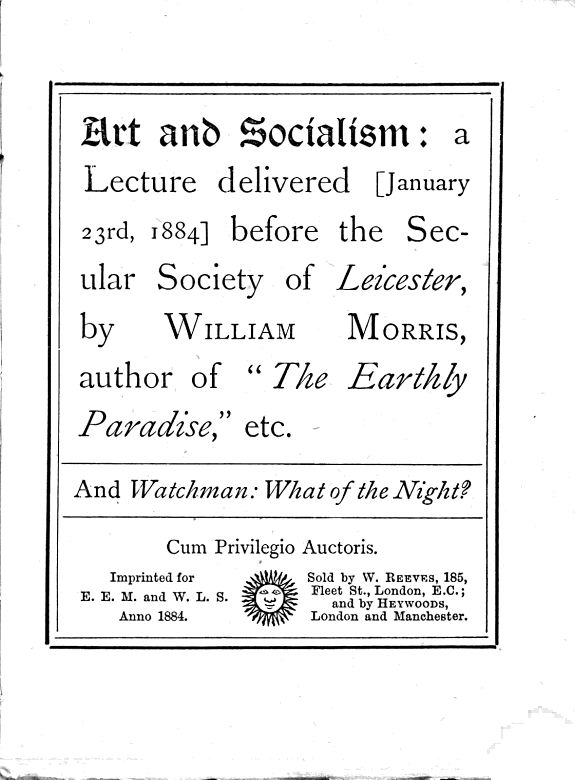
William Morris, a pivotal figure of the Arts and Crafts movement and a fervent socialist, delivered his lecture "Art and Socialism" in 1884. This wasn't merely a political address but a profound call for societal transformation, aiming to place art, beauty, and meaningful labor at the core of human existence. He viewed 19th-century industrial capitalism as a destructive force, damaging the environment and crushing the human spirit through dehumanizing work. His vision of socialism was inseparable from a revival of art and craft, believing a socialist society would naturally foster widespread beauty. Morris advocated for the "art of living" and "art of making," prioritizing human well-being and aesthetic pleasure over profit. He saw the ugliness and soullessness of the industrial age as a direct result of a system that valued profit over
The Core Problem: Industrialism's Assault on Art and Humanity
Morris's central critique focused on the degradation of art and labor under 19th-century industrialism. He depicted a society saturated with manufactured ugliness, where the Industrial Revolution severed the connection between worker and product. Pre-industrial craftsmanship, he argued, imbued even common objects with individual expression and pride. The factory system, however, fragmented labor into repetitive, dull tasks, reducing workers to mere cogs. This division of labor, while boosting efficiency, alienated workers from their craft, stripping it of creativity and satisfaction. This affected all classes, leading to a decline in aesthetic sensibility and a societal preference for quantity over quality. He vividly described ugly industrial towns, polluted landscapes, and shoddy mass-produced goods, arguing that this environment
The Socialist Solution: Art as the Foundation of Society
For Morris, socialism was the essential framework for reviving art and restoring h