
Summary preview
Unlocking Your Financial Destiny: A Deep Dive into The Cashflow Quadrant
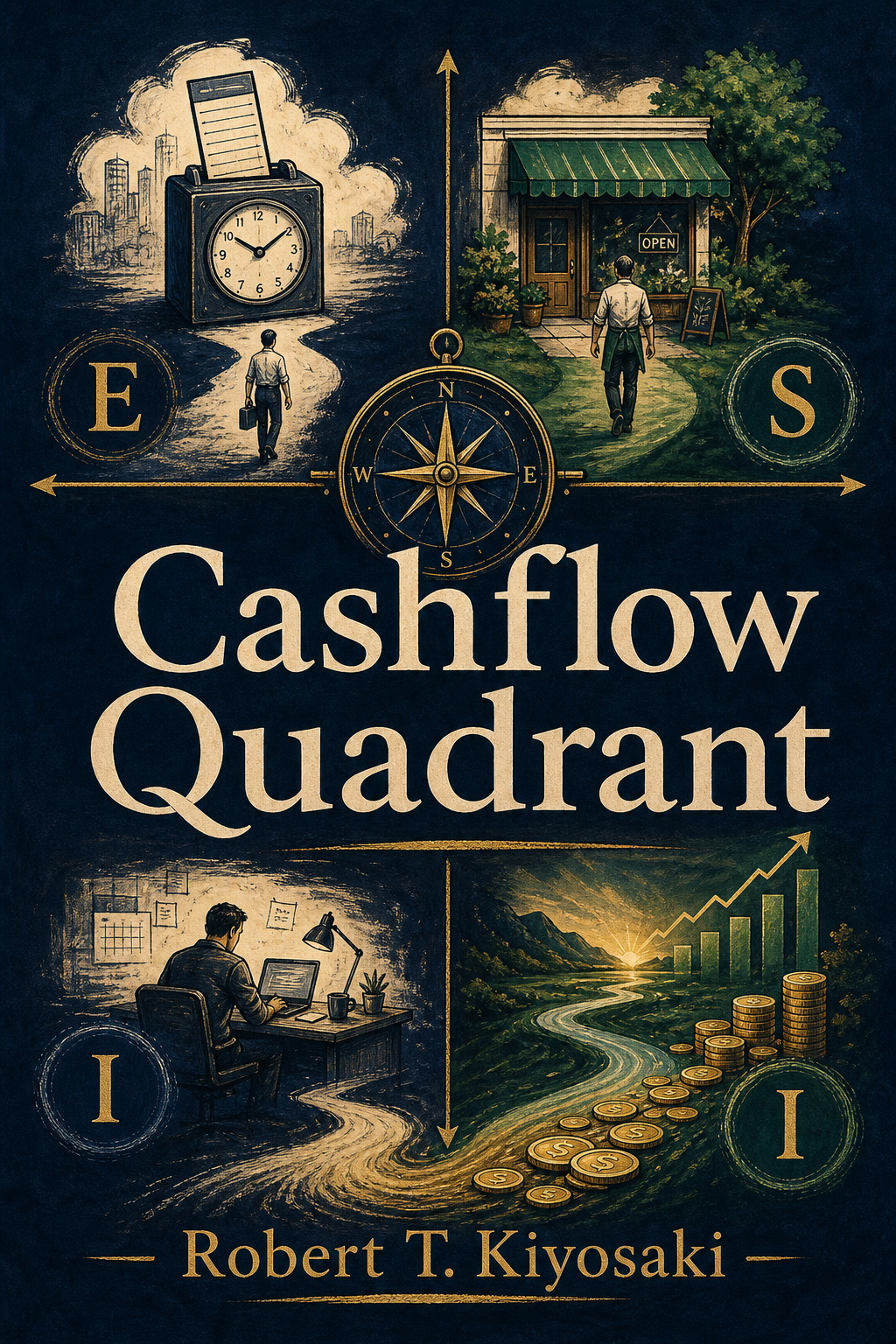
Robert T. Kiyosaki's "Rich Dad's CASHFLOW Quadrant" offers a roadmap to understanding financial success by categorizing how people earn money into four distinct quadrants: Employee (E), Self-Employed (S), Business Owner (B), and Investor (I). The book argues that true financial freedom lies on the right side of the quadrant (B and I), where income is generated through systems and assets rather than solely through personal time and effort.
The Big Picture: Why This Quadrant Thing Matters
The Cashflow Quadrant is a framework that illustrates how individuals earn their money. E (Employee): Trades time and skills for a salary from an employer. S (Self-Employed): Is their own boss, but income is directly tied to personal effort. B (Business Owner): Owns a system with people working for them, allowing the business to generate income independently. I (Investor): Makes money through assets that generate passive income. Kiyosaki highlights that most people are stuck on the left side (E and S), which offers security but limits income potential and freedom. The right side (B and I) offers greater wealth and freedom by leveraging systems and assets.
The Industrial Age vs. The Information Age
Historically, during the Industrial Age, professions like doctors and lawyers were highly valued for their stability. However, the Information Age has disrupted these traditional paths. Today, successful individuals like Bill Gates and Richard Branson, who operate primarily in the B and I quadrants, often didn't follow the conventional academic route. This shift emphasizes the need for new skills and mindsets for modern financial success.