
Summary preview
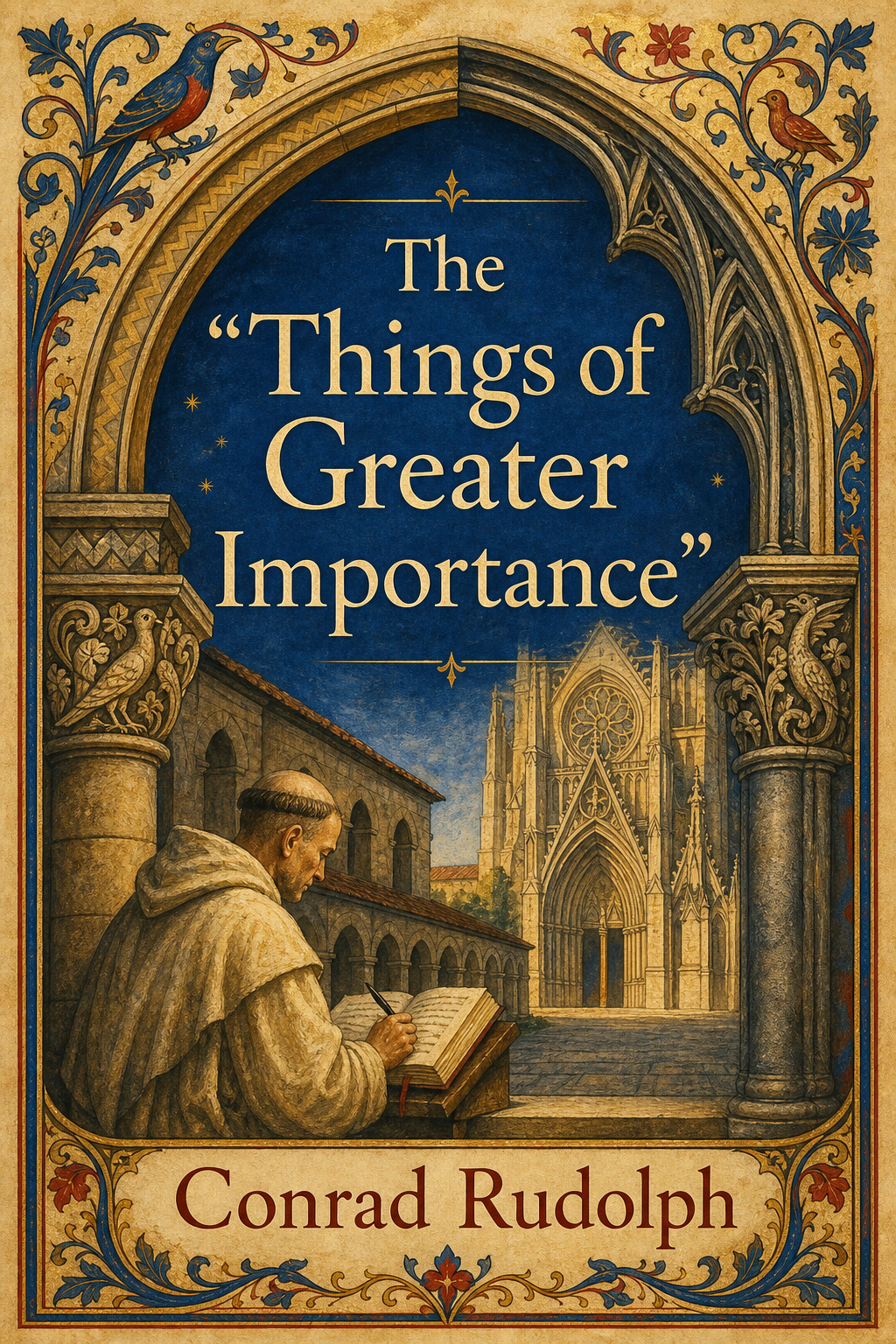
{ "title": "Medieval Art's Social Tapestry: Unpacking Bernard's Apologia", "sections": [ { "heading": "1. Introduction: Setting the Stage for Artistic Debate", "content": "The book 'Things of Greater Importance' delves into medieval art, focusing on Bernard of Clairvaux's 'Apologia' as a key document. Contrary to past interpretations of Bernard as simply anti-art or anti-monastic art, this book argues for a more complex understanding. It positions the 'Apologia' as a critical lens through which to view the social and cultural context of medieval art, especially during a period of significant artistic innovation (Romanesque to Gothic, monumental sculpture, stained glass, pilgrimage art). The author, Rudolph, suggests Bernard's concerns were specific to the impact of art on monastic life, emphasizing spiritual focus over material extravagance. The book aims to explore the theoretical underpinnings and societal function of medieval art, offering insights into both Romanesque and Gothic periods." }, { "heading": "2. Main Theses: Bernard's Apologia and Medieval Art's Role", "content": [ { "thesis": "Thesis 1: The 'Apologia' is Not a Simple Condemnation, but a Complex Engagement with Art's Function in Monasticism.", "explanation": "Rudolph argues Bernard's critique was not a blanket rejection of art but a concern about its excessive effects. Bernard worried that elaborate and costly religious art, particularly in monasteries, could distract from spiritual devotion, fostering vanity and attachment to the material world rather than humility and focus on the divine. His focus was on art's impact on the interior spiritual life of monks." }, { "thesis": "Thesis 2: Bernard's Critique Offers a Window into Medieval Attitudes Towards Art and Its Social Context.", "explanation": "By analyzing Bernard's specific criticisms, the book reveals how art was perceived and valued in the 12th century, extending beyond aesthetics to theology, spirituality, and social order. The 'Apologia' is seen as crucial for understanding the theoretical basis and ongoing dialogues surrounding the role of images in religious life during a period of sophisticated artistic development." }, { "thesis": "Thesis 3: The 'Apologia' Has Significant Implications for Understanding Romanesque and Gothic Art.", "explanation": "Bernard's life spanned the transition between Romanesque and Gothic styles. His writings provide a framework for interpreting the meaning and function of art during these periods, offering insights into how these evolving artistic styles were perceived and understood by contemporaries, moving beyond stylistic analysis to ideological interpretation." } ] }, { "heading": "3. Key Ideas: Deconstructing the Apologia and Its World", "content": [ { "idea": "Idea 1: The Context of Artistic Efflorescence", "details": "Bernard wrote during a period of immense artistic growth: monumental sculpture, sophisticated stained glass, advanced architecture (Romanesque and Gothic), and art for