
Summary preview
Practical Pedagogy: Your Compass for the Evolving World of Education
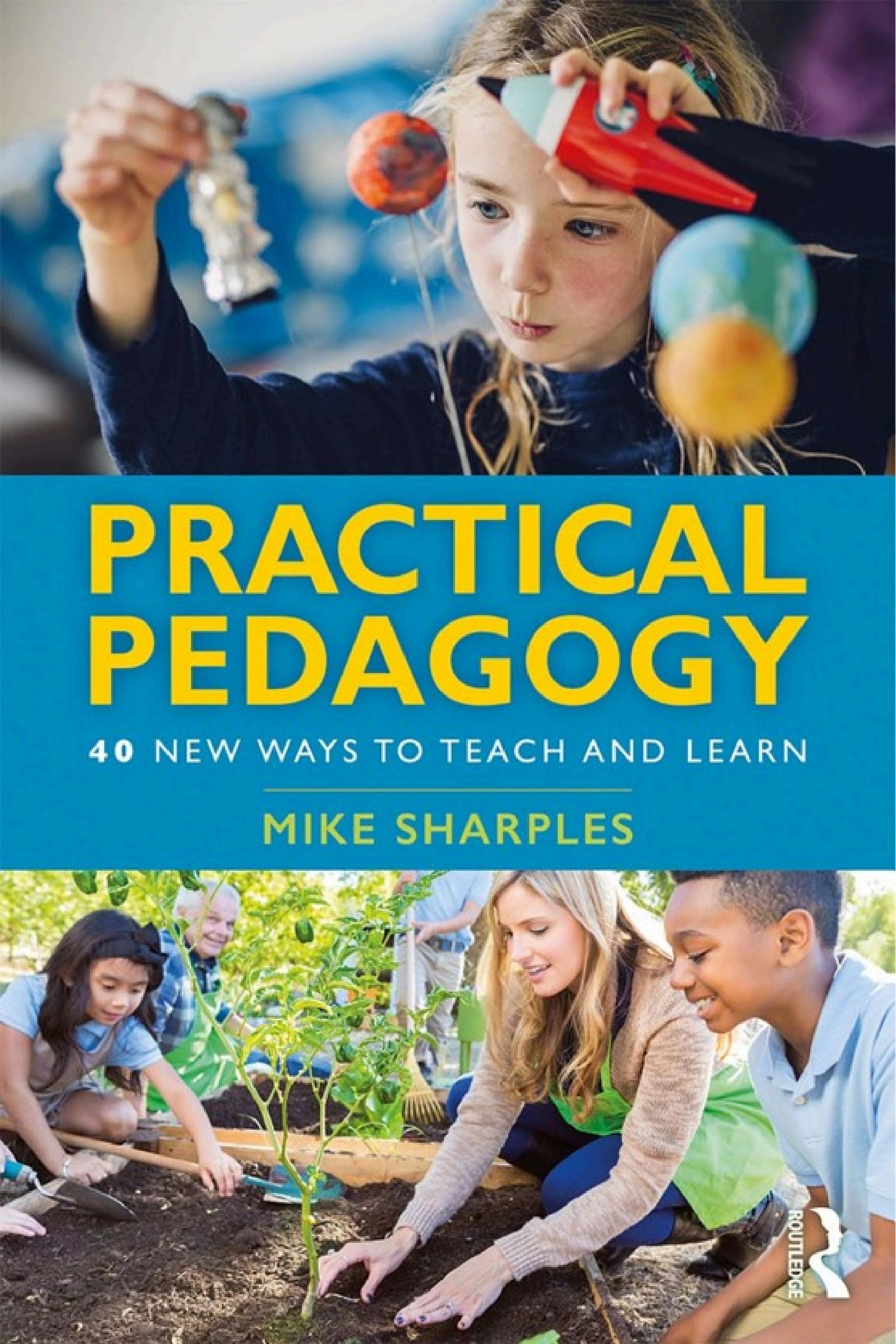
"Practical Pedagogy" serves as a guide to innovative and effective teaching and learning methods, drawing insights from the "Innovating Pedagogy" reports. It distills 40 essential pedagogies that are shaping the future of education across various learning environments. The resource is designed for a broad audience, including new and experienced educators, policy makers, and anyone involved in education, offering practical strategies grounded in research from psychology, education, social sciences, and neuroscience. The book is structured around six core themes: Personalization, Connectivity, Reflection, Extension, Embodiment, and Scale, providing a framework to understand and apply these pedagogies.
Theme 1: Personalization – Tailoring the Learning Journey
Personalization moves away from a one-size-fits-all approach, focusing on individual learner needs, paces, interests, strengths, and challenges. It involves customizing the pace of learning, differentiating content delivery through various formats and complexity levels, tailoring instruction and feedback, and empowering students with agency in their learning choices. Importance: Personalization addresses the limitations of traditional models where some students are bored and others are left behind. It boosts engagement by making content relevant and accessible, fosters confidence and self-efficacy through student control, and allows for targeted support to address learning gaps effectively. Innovative Pedagogies: Adaptive Learning: Technology-driven systems adjust content difficulty and type based on real-time student performance. Competency-Based Education (CBE): Focuses on demonstrating mastery of skills rather than time spent, allowing for self-paced progression. Personalized Learning Plans (PLPs): Collaborative roadmaps outlining individual learning goals, strategies, and progress tracking. Choice Boards and Learning Menus: Offer students options for activities and tasks to meet learning preferences while achieving objectives. Challenges: Increased teacher workload, reliance on technology (raising equity concerns), complex assessment methods, and maintaining a sense of community among diverse learning paths.
Theme 2: Connectivity – Building Bridges in Learning
Connectivity emphasizes creating links between learners, educators, subjects, and the classroom with the wider world. It fosters collaboration, peer learning, strong student-teacher relationships, interdisciplinary understanding, and real-world relevance. Digital tools significantly enhance this theme, enabling global collaboration and access to diverse information. Importance: Connectivity deepens engagement by promoting collaboration and articulation of ideas. Peer learning is powerful, and connecting subjects builds a holistic understanding of the world. Real-world connections increase motivation by demonstrating the 'why' behind learning. Key Pedagogies: Collaborative Learning: Students work in groups to achieve common goals. Community of Inquiry: Emphasizes social, cognitive, and teaching presence for collaborative knowledge construction, especially in online environments. Project-Based Learning (PBL): Involves authentic, complex projects requiring cross-disciplinary connections and real-world engagement. Connectivism: A learning theory for the digital age, where knowledge resides in networks and learning is about navigating and building these networks. Translanguaging: Recognizes and utilizes the full linguistic repertoire of multilingual speakers, connecting different linguistic resources for richer meaning-making. Digital Landscape: Digital tools enable global connections, virtual experiences, and real-time collaboration, but challenges include the digital divide, information overload, distractions, and the potential for superficial online interactions.
Theme 3: Reflection – Thinking Deeply About Learning
Reflection involves pausing to think critically about the learning process, transforming experiences into understanding and growth. It encompasses metacognition (thinking about one's thinking), self-assessment, critical analysis, connecting experience to theory, and planning future actions. Importance: Reflection turns passive reception into active knowledge construction. It deepens understanding, improves learning strategies, develops self-awareness, fosters critical thinking, and enhances problem-solving. For educators, it is crucial for professional development. Pedagogies Centered on Reflection: Learning Journals/Diaries: Regular writing about learning experiences for processing and analysis. Think-Pair-Share: The initial 'think' phase allows for individual reflection. Debriefing: Structured discussions after activities to reflect on what happened, what was learned, and how participants felt. Teachback: Learners explain concepts back, requiring deep reflection and revealing misunderstandings. Self-Regulated Learning (SRL): Learners actively manage their learning, with metacognitive self-reflection being a key component. Critical Reflection: Questioning underlying assumptions, power structures, and ethical implications of learning. Cultivating Reflection: Requires structured prompts, dedicated time, a safe environment, educator modeling, and varied methods (writing, drawing, discussion).
Theme 4: Extension – Pushing Boundaries and Exploring Further
Extension encourages learners and educators to go beyond core objectives, fostering curiosity, creativity, and discovery. It involves deeper exploration, creative application of knowledge, interdisciplinary connections, future-oriented thinking, and innovation. Importance: Extension develops higher-order thinking skills, increases engagement and motivation, fosters creativity and innovation, builds resilience, and prepares learners for future challenges requiring creative problem-solving. Pedagogies Facilitating Extension: Inquiry-Based Learning: Students drive learning through their own questions and exploration. Project-Based Learning (PBL): Creating final products or solutions inherently extends learning through research, design, and refinement. Design Thinking: An iterative problem-solving framework emphasizing empathy, ideation, prototyping, and testing. Bricolage: Using available resources creatively to solve problems or create something new, extending understanding through repurposing knowledge. Genius Hour / 20% Time: Dedicated time for students to work on passion projects. Research Projects: Synthesizing literature or conducting original research to extend knowledge. Creating Opportunities: Involves posing open-ended questions, providing authentic challenges, embracing student-led inquiry, encouraging experimentation, connecting with experts, and showcasing student work.
Theme 5: Embodiment – Learning Through the Body and Senses
Embodiment recognizes that learning is deeply intertwined with physical experiences, senses, and interactions with the environment. It emphasizes sensory input, movement and physical activity, hands-on experience, spatial awareness, and the connection between physical sensations, emotions, and learning. Importance: Embodied learning enhances understanding and retention by engaging multiple senses and actions, makes abstract concepts concrete, increases engagement (especially for kinesthetic learners), develops diverse skill sets, and promotes well-being through integrated movement. Pedagogies Embracing Embodiment: Experiential Learning: Learning by doing through field trips, simulations, and lab work. Play-Based Learning: Exploration and learning through natural, embodied interaction. Role-Playing and Simulations: Experiencing concepts from the inside by acting out scenarios. Manipulatives: Using physical objects to represent and explore concepts. Movement and Gesture: Incorporating physical actions to explain or engage with subject matter. Arts Integration: Using visual arts, music, drama, and dance to explore and express understanding. Mindfulness and Embodied Awareness Practices: Improving focus and self-regulation through awareness of physical sensations and emotions. Bringing Embodiment into Practice: Involves using real objects, incorporating movement breaks, encouraging sketching, having students act things out, leveraging the environment, and connecting concepts to physical experiences.