
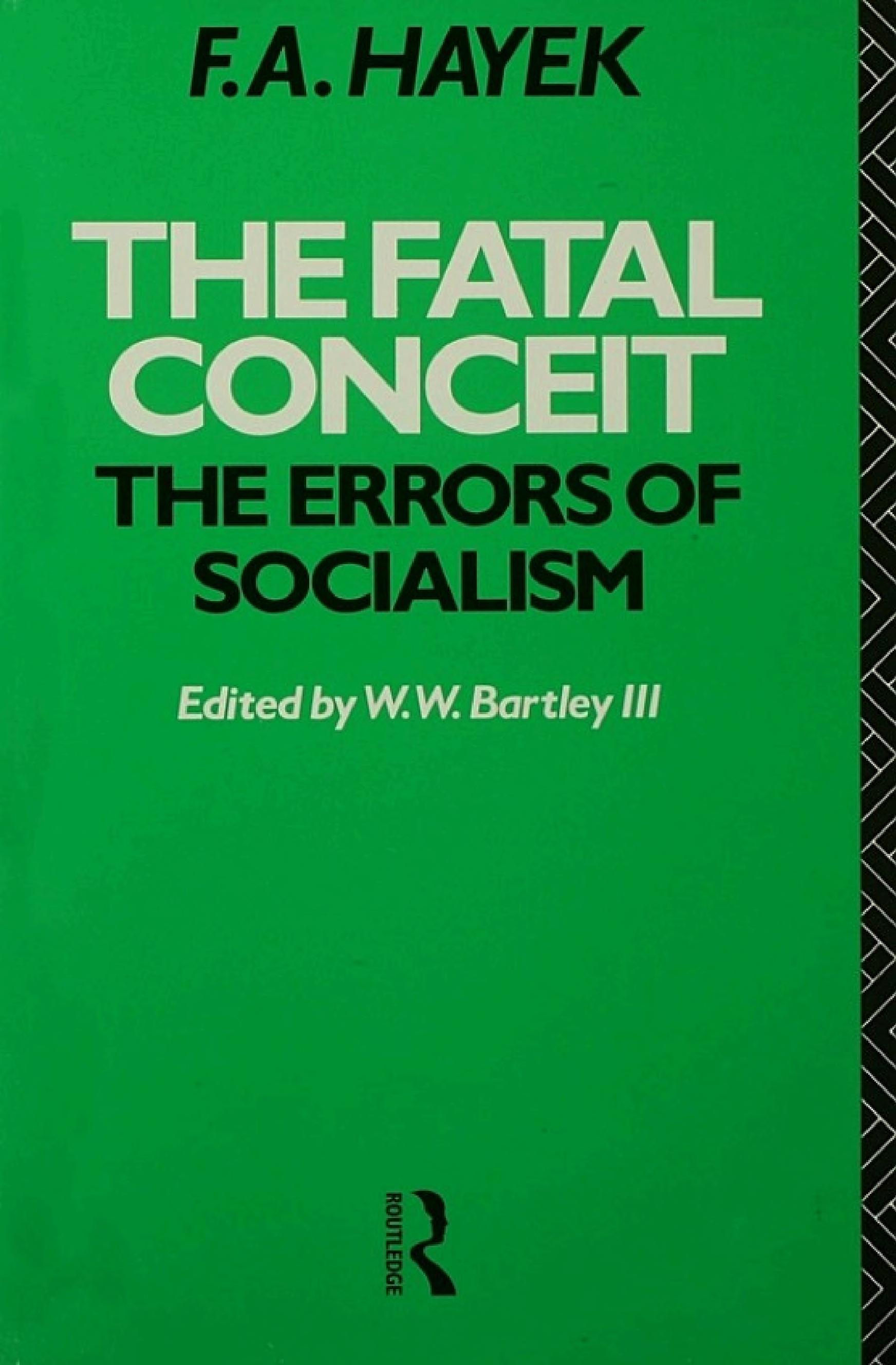
Summary preview
The Fatal Conceit: Unpacking Hayek's Masterpiece
F.A. Hayek's "The Fatal Conceit" is a seminal work that challenges our understanding of society, economics, and the limits of human knowledge. Hayek argues that the greatest human error is the belief that we, as individuals or groups, can design and control complex social systems from the top down. He terms this the "fatal conceit," asserting that such attempts are doomed to fail because they ignore the fundamental truth of how societies function: through a complex, emergent order built on the dispersed knowledge of millions. This book explores the limits of human knowledge, the power of spontaneous order, and why attempts to engineer society according to a master plan are inherently flawed.
Section 1: Introduction - The Overconfident Planner
The book begins by confronting a pervasive human tendency: the desire to plan and control, particularly in politics and economics. Hayek observes that many brilliant minds believe they can design superior systems to those that have evolved organically. While well-intentioned, this impulse is fundamentally flawed due to a misunderstanding of the vast, unmanageable knowledge required to truly control complex systems like human societies. Every individual possesses unique, localized knowledge crucial to their own lives and, collectively, to society's functioning. No single person or committee can gather and process all this information. The "fatal conceit" is the arrogance of believing we can possess or direct all necessary knowledge, relying on abstract reason divorced from lived experience. Hayek contrasts this with spontaneous order,
Section 2: Main Theses - The Pillars of Hayek's Argument
Hayek's core arguments in "The Fatal Conceit" can be summarized by five interconnected theses: Thesis 1: The Limits of Human Knowledge Are Vast and Inescapable. Knowledge in complex societies is inherently dispersed, often unarticulated (tacit), and incomplete for any single mind or group. The most critical knowledge for societ