
Summary preview
Galaxy Morphology and Classification: A Journey Through Cosmic Shapes
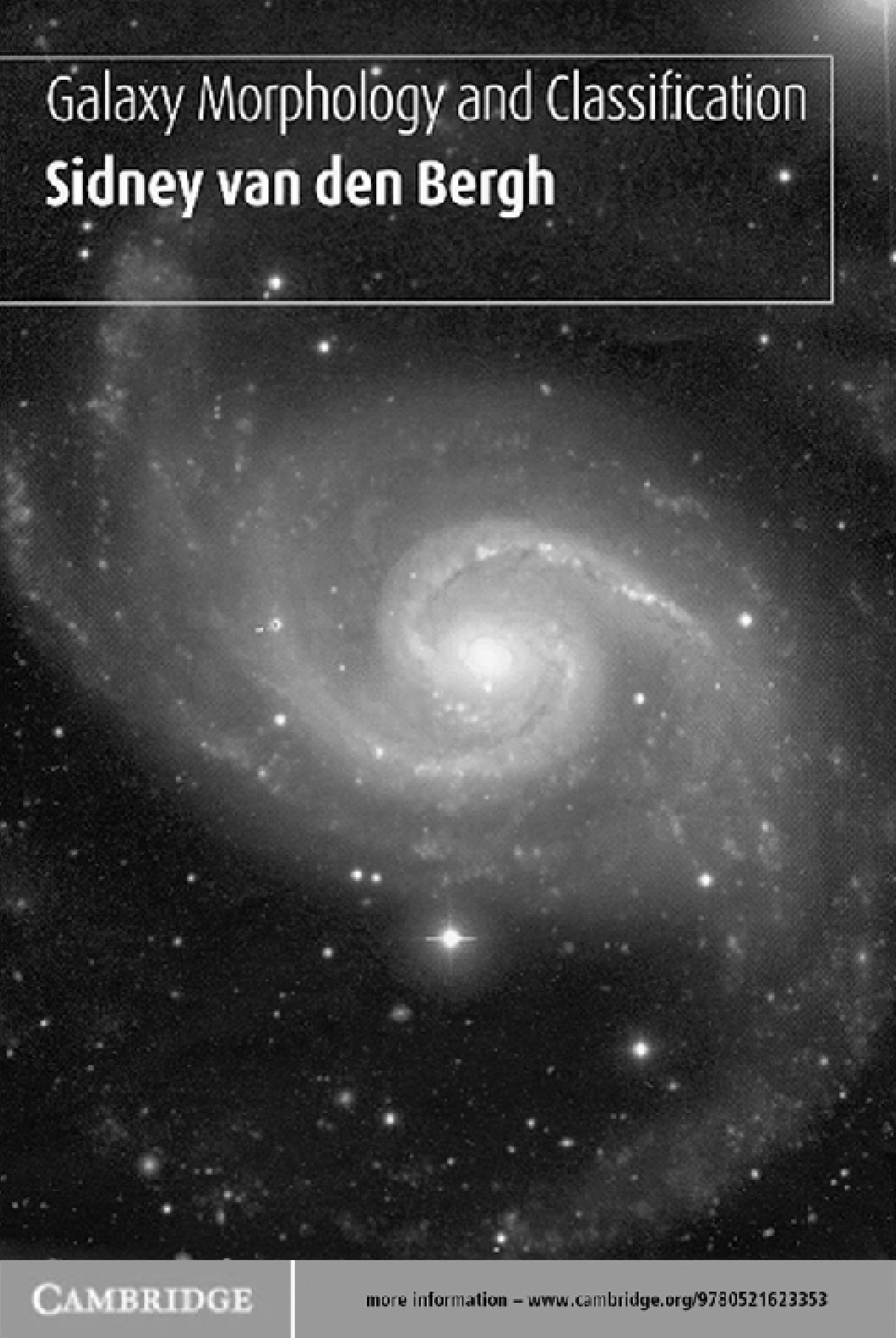
This summary explores Sidney Van den Bergh's "Galaxy Morphology and Classification," a guide to understanding the shapes of galaxies and how scientists categorize them. It emphasizes that classification is vital for deciphering galaxy formation, evolution, environmental influences, and composition.
The Big Picture: Why Classify Galaxies?
Classifying galaxies is akin to categorizing animals; it reveals fundamental insights into their formation, evolution, environmental context, and composition. Shape serves as a crucial clue to their deeper physics and history.
The Grand Scheme: Hubble's Legacy and Beyond
Edwin Hubble's "Tuning Fork" diagram, categorizing galaxies into ellipticals, spirals, barred spirals, and irregulars, laid the groundwork. Van den Bergh's work builds on this, acknowledging its limitations and incorporating newer understandings of galaxy evolution, which is complex and influenced by mergers and environment, not a simple linear progression. Challenges like viewing angle and transitional stages complicate classification.