
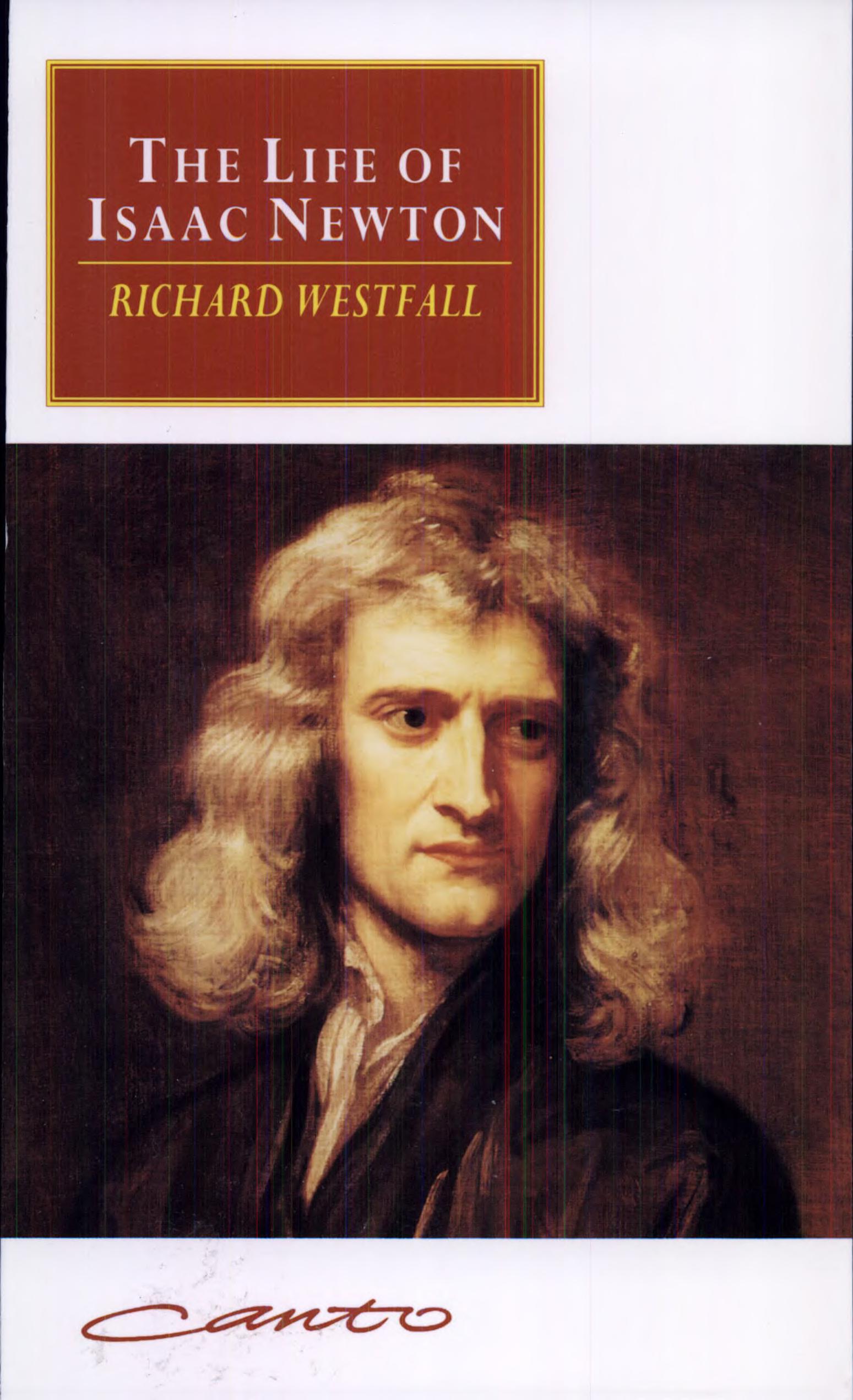
Summary preview
The Colossus of Science: A Deep Dive into the Life of Isaac Newton
This is a summary of Richard S. Westfall's biography of Isaac Newton, focusing on the key aspects of his life, scientific contributions, personal beliefs, and lasting legacy. Westfall's work is lauded for making Newton's complex life and groundbreaking science accessible and engaging.
The Genesis of a Genius: From Woolsthorpe to Cambridge
Isaac Newton was born prematurely on Christmas Day, 1642, in Woolsthorpe, Lincolnshire. His father died before his birth, and his mother remarried when he was three, leaving him in the care of his grandmother. This early abandonment may have contributed to Newton's solitary and sometimes difficult personality. He was not initially a standout student but showed early mechanical aptitude by building models. Despite his mother's desire for him to become a farmer, his potential was recognized, and he enrolled at Trinity College, Cambridge, in 1661. There, he was a "sizar," working to pay for his education, and began devouring works on mathematics and physics, moving beyond the prevailing Aristotelian philosophy.
The Annus Mirabilis: Nature's Secrets Unveiled
During the Great Plague (1665-1666), Cambridge University closed, forcing Newton to return to Woolsthorpe. This period of isolation became his annus mirabilis (miracle year), during which he made astonishing breakthroughs: Calculus: He developed calculus, a new branch of mathematics essential for understanding rates of change and motion, which he called the "method of fluxions." Optics and Light: Through prism experiments, he demonstrated that white light is composed of all the colors of the spectrum, revolutionizing the understanding of light and color. Universal Gravitation: He began to formulate his theory of universal gravitation, hypothesizing that the force pulling an apple to the ground was the same force keeping the moon in orbit around the Earth.