
Summary preview
AstroOverview #206: A New Map of the Universe and Double Stars
Hey everyone! Welcome back to another exciting episode of 'AstroOverview.' Today, we've got a packed show with some absolutely mind-blowing topics that are going to change how we look at the cosmos. Seriously, buckle up!
Introduction: What's New in the Universe?
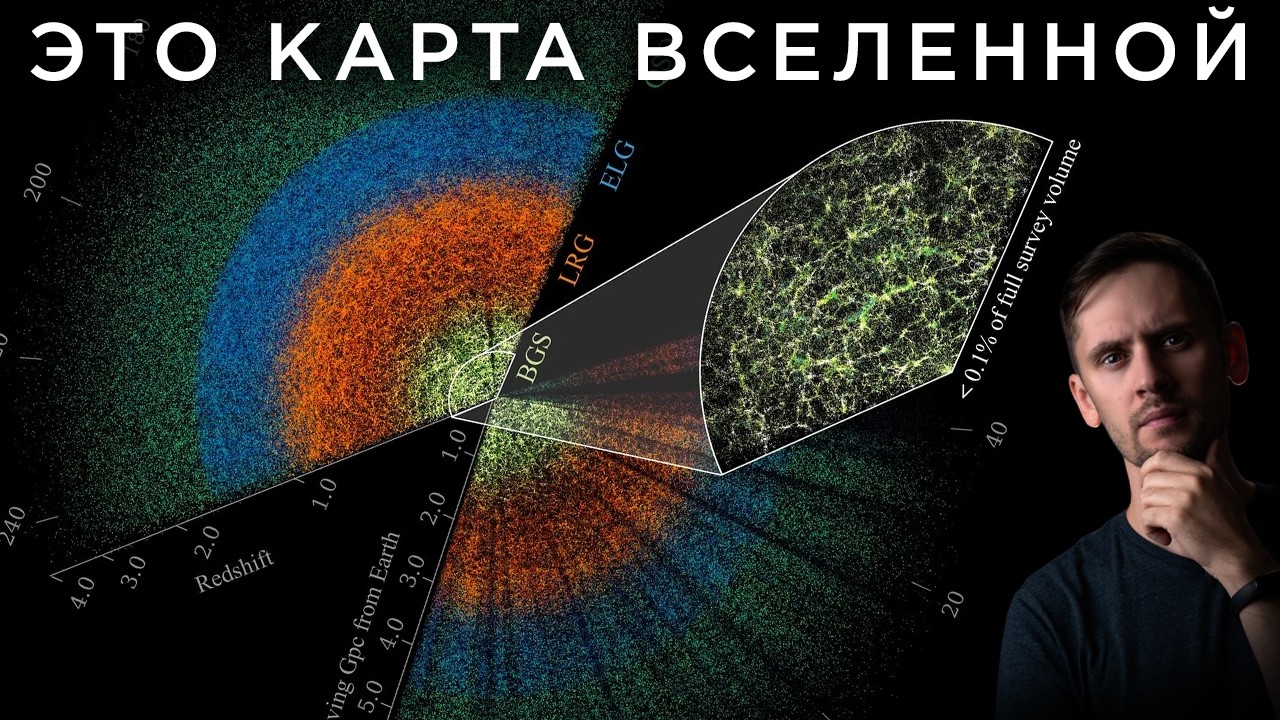
We're kicking things off with the biggest news: scientists have just unveiled the most detailed 3D map of the universe ever created. This isn't just a pretty picture; it's a revolutionary tool that could fundamentally alter our understanding of everything out there. We'll also be diving into the fascinating world of binary stars, exploring the surprising idea that having two suns might actually be better for forming planets. And of course, we can't forget updates from Mars, the Moon, and those intrepid deep-space explorers, the Voyagers. Let's get this cosmic party started!
Section 1: The Most Detailed Universe Map – What Are We Seeing?
Imagine holding in your hands the most detailed map of the universe ever conceived. It’s almost too much to grasp! When we look at these incredible images of the universe's large-scale structure, it often looks like some kind of cosmic web, a vast network of filaments made up of galaxy clusters. We're talking about scales that span hundreds of millions, even billions, of light-years. It’s truly awe-inspiring, right? But it's super important to understand that these visualizations aren't like your typical photographs. We don't just point a telescope and get a ready-made picture. Instead, there are two main ways these cosmic maps are created: 1. Computer Simulations: These are our best attempts to recreate the universe's structure based on the physics we currently understand. They involve certain assumptions and simplifications, but they