
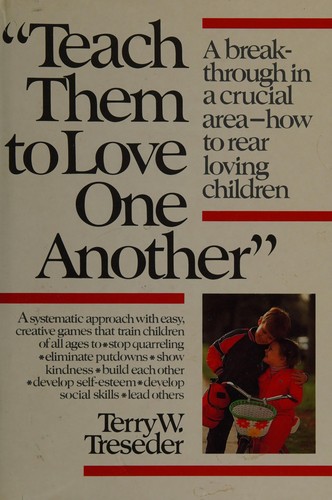
Summary preview
Embracing Love: A Journey with Terry W. Treseder
Terry W. Treseder's "Teach Them to Love One Another" is presented not as a superficial feel-good read, but as a practical guide to understanding and actively practicing love. The book's central premise is that love is not merely an abstract concept or emotion, but a daily, actionable principle that should guide our interactions, decisions, and communities. Treseder aims to demystify love, presenting it as a fundamental element for personal fulfillment and societal harmony, accessible to a general audience. The book's concise 134-page length suggests a focused and dense exploration of its subject matter.
The Core Message: Love as a Verb
The most significant takeaway from Treseder's work is the redefinition of love as an action, a "verb." He emphasizes that proclaiming love or experiencing the emotion is insufficient; true love must be demonstrated through consistent actions. This involves consciously choosing patience over frustration, active listening over self-centered speaking, and offering help even when tired. It's about considering the needs and feelings of others, not to the point of self-neglect, but as a balanced and intentional effort to foster connection and care. The disconnect between stated love and demonstrated actions is identified as a corrosive force in relationships. Treseder advocates for cultivating love as a habit, making it as natural as breathing, characterized by quiet support, understanding, and a willingness to go the extra mile.
Why is This So Important?
Treseder posits that a deficiency in intentional love is a root cause of numerous personal and societal problems, including division, conflict, and loneliness. Conversely, the active practice of love is seen as a catalyst for building stronger relationships, fostering trust, and creating more harmonious environments. This positive impact is described as a ripple effect, where one act of genuine love can inspire further acts, leading to widespread positive change. Furthermore, practicing love is presented as profoundly beneficial for the individual, leading to increased happiness, a stronger sense of purpose, and more meaningful connections, echoing the principle of receiving through giving.